The Remembering Sky
There was a time, not long ago, when the world fell into stillness. It was the beginning of a long period of the pandemic, when travel stopped and the hum of life softened into a strange kind of silence like tonight. I had just arrived back in Japan then—alone, on the last flight out of Bangkok before the sky travel was closed. The air outside felt ancient and untouched, the apartment was quiet without Wallie walking around, it was during those long, reflective months that the phrase The Individual Star resurfaced.
The words pierced me—not as an idea but as a remembrance. Something in my soul stirred, as though an echo that had been buried under years of noise suddenly found its way back to sound. I remember writing the phrase down, staring at it, unable to explain why it felt like recognition—a long-lost old friend. It was as if I had been called by name in a language older than my own.
From that moment, I began to study not only Jung’s approach to consciousness but also his relationship with the stars—with the numinous, with the divine order that animates both psyche and cosmos. I read of his conviction that each of us carries within an inner cosmos, that the map of the heavens and the depths of the soul are mirrors of one another. He once wrote, “Astrology represents the summation of all the psychological knowledge of antiquity.” In another place, he spoke of how the “starry vault of heaven is in truth the open book of cosmic projection,” suggesting that when we look upward, we are not gazing at something separate from ourselves, but rather reading the symbolic language of our own unconscious.
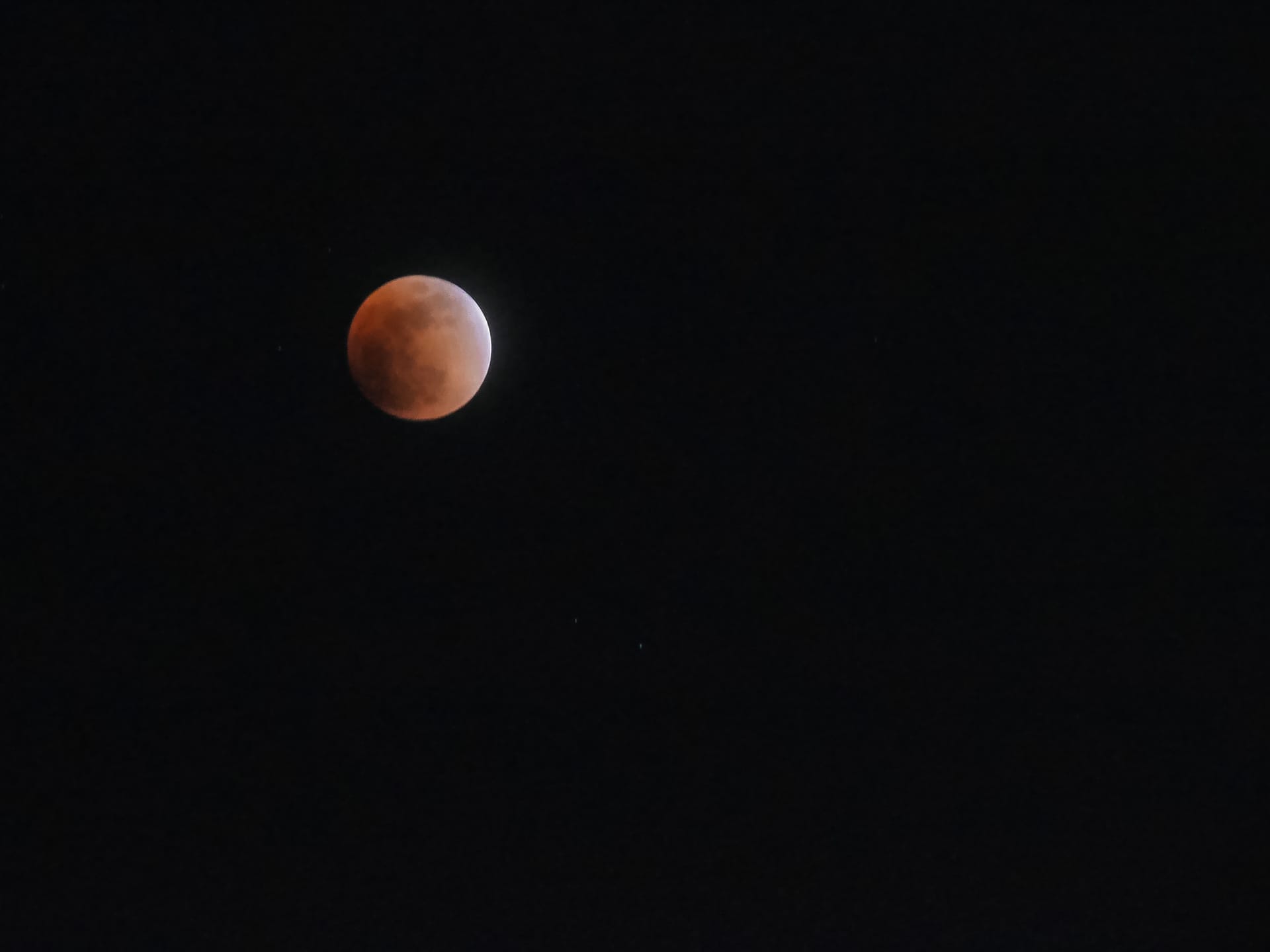
There is a specific stillness that happens when the moon rises. It’s not simply light—it’s a feeling, an intelligence, a rhythm that shifts something in the body. The moon doesn’t shine so much as it reminds. When I began studying Jung more deeply during those pandemic years, I realized that what I felt when I gazed at the moon or watched dawn break was what he called a numinous experience—an encounter with something greater than the personal ego, something that evokes both awe and belonging. Jung described such moments as “acts of grace,” in which the unconscious communicates through image, dream, and symbol. The light of the moon became, for me, a visible metaphor of that interior illumination.
Jung believed that strengthening consciousness was not about controlling the unconscious but entering into dialogue with it—learning its symbolic language, its rhythms, its myths. To live consciously is to live in relationship with mystery. And so, the moon became my teacher in that practice. It showed me that consciousness is not a straight line but a cycle, a breathing in and out. That illumination comes only after darkness has been fully honored.
In Jung’s Memories, Dreams, Reflections (Chapter 10, p.289) how, near the end of his life, he dreamt of the cosmos: “It seemed to me that I was high up in space. Far below I saw the globe of the earth, bathed in a gloriously blue light...” That vision haunted him. In it, he recognized the unity of microcosm and macrocosm, the living correspondence between the human soul and the stars. For him, individuation (the process of becoming one’s true Self) was not merely psychological but cosmic. Each of us, he said, carries a unique spark of the divine pattern, an individual star guiding us toward wholeness.
In the Red Book (Appendix C, p.578), Jung wrote: "The celestial world is illuminated through the spiritual sun. Its counterpart is the moon, and just as the moon is the crossing to the dead of space, the spiritual sun is the crossing to the pleroma, the upper world of fullness. The moon is the God's eye of emptiness, just as the sun is the God's eye of fullness. The moon that you see is the symbol, just as the sun that you see. Sun and moon, that is, their symbols, are Gods. There are still other Gods; their symbols are the planets."
"Man becomes through the principium individuationis. He strives for fabulous individuality, through which he ever increasingly concentrates the absolute dissolution of the Pleroma. Through this, he makes the Pleroma the point that contains the greatest tension and is itself a shining star, immeasurably small, just as the Pleroma is immeasurably great.——
"The more concentrated the Pleroma becomes, the stronger the star of the individual becomes."
When I first read that, I felt tears rise for no reason I could name. It was as if I had been waiting all my life for permission to trust the language of the sky.
I’ve always believed—quietly—that I am an old soul that comes from somewhere else. The one who has walked through lifetimes, carrying the wisdom and fatigue of many existences on this earth, or in another realm, another galaxy. I don't have proof, only an inner knowing, a pulse of memory without a place. In certain spiritual traditions, people like me might be called starseeds—souls who feel an ancient origin beyond this Earth, drawn here to help anchor light through awareness and creation.
I don't claim this identity as doctrine; I hold it as a metaphor and I don't need to prove it. What matters is the resonance—the way the idea hums in the body like a forgotten lullaby. I have always looked at the stars not as distant glitters, but as family. When I gaze at them, I feel the same comfort a child feels when recognizing a familiar face in a crowd. It is not imagination. It is remembrance.
Science, too, speaks this language in its own way. The astronomer Carl Sagan once said, “We are made of star-stuff.” Every element in our body—carbon, oxygen, hydrogen, calcium—was forged in the heart of long-dead stars. When I first heard those words, I felt a sense of homecoming. The mystic and the scientist had met at the same altar, they always do—as everything does. The ancient intuition that the cosmos lives within us found its confirmation in physics and astrophysics. It was as if Sagan had translated Jung into starlight.
Jung might have said: What Sagan discovered through the telescope, he discovered through the soul. Both paths lead to the same truth—that the psyche and the cosmos are woven from the same fabric of mystery.
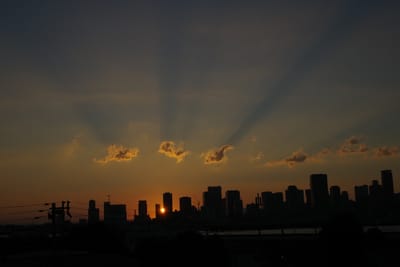
Since that time, in my quiet hours, I have begun to see how the rising and setting of the sun mirror my own cycles of clarity and shadow. How the moon's waxing and waning corresponded with the tides of creativity and rest within me. I began to live according to these celestial rhythms, not as superstition, but as a form of listening—a way of aligning my inner atmosphere with the greater movements that sustain life.
Now, when I write, I often begin by looking out the window to see what the sky is doing. If the dawn is pale and fragile, I write gently, as though speaking to a child. If the sunset is a flood of gold, I write boldly, allowing the words to pour like molten light. When the full moon rises, I write from reflection and gratitude, trusting that what is meant to be illuminated will find its way into the open.
I no longer see the act of writing as solitary, but as collaboration—with the unseen, with the celestial, with the eternal intelligence that breathes through everything. To me, consciousness is not a human invention; it is the universe becoming aware of itself through our eyes, our words, our hearts.
So perhaps that is what The Individual Star truly means—not a single point of light lost in the dark, but the remembrance that each of us is a facet of the same radiant whole. Our task is to find our specific frequency, our song, our orbit—and to shine from it, not as imitation, but as truth.
Every time I look up at the night sky, like our ancestors since the dawn of time did, I feel that truth again. The stars do not compete; they coexist in perfect balance, each burning according to its nature. Perhaps strengthening consciousness, as Jung meant it, is not about ascending toward the heavens but remembering that we are already made of them.
And so, when I raise my eyes to the horizon at sunrise or to the full moon at night, I am not seeking answers. I am remembering a language I once spoke fluently—the language of light, silence, and infinite belonging.
Some people pray to heaven.
I look up and whisper to the stars:
I remember you.
No spam, no sharing to third party. Only you and me.