Capture the Invisible
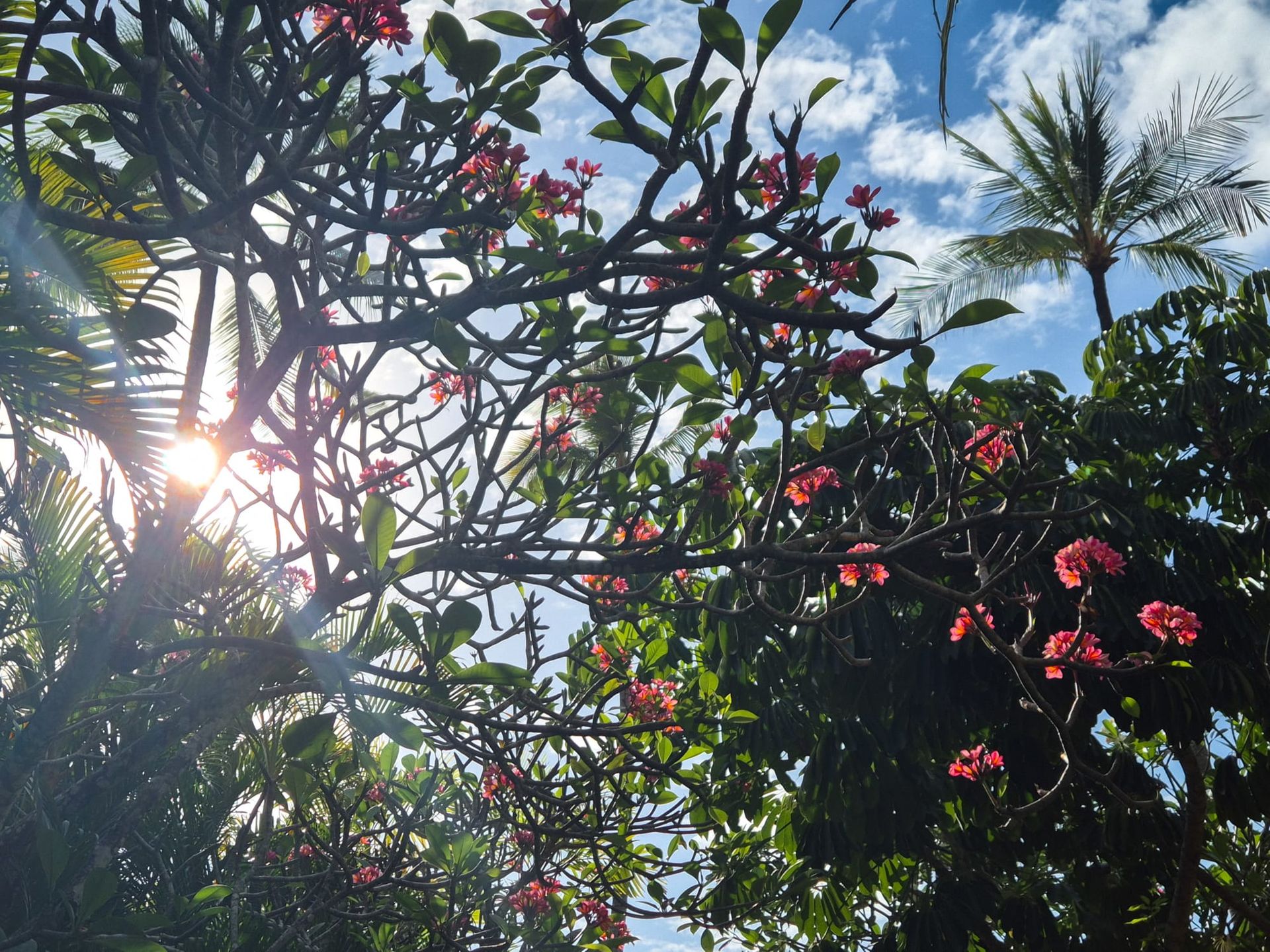
The morning light is hitting the frangipani leaves just so, throwing sharp, shifting patterns that dissolve before the coffee even cools.
My mind drifts to a man.
A man whose works never fail to inspire me. We share the same passion—time.
People call his obsession with time a narrative gimmick, a clever puzzle for the intellect. But sitting here in the quiet of the garden, I see it for what it truly is: a psychological architecture built entirely out of the invisible.
Like when I try to draw rustled leaves and branches swaying in the wind, or capture a gleam of morning sunlight in my camera. How to bring a form to the formless?
It takes heart.
This man leaps, folds, and breaks timelines—not to confuse us, but to shake us awake. By shattering the illusion of a linear clock, he forces an acute, almost painful awareness of what most of us are unable to perceive.
We never truly see the value of a moment until the film reels backward, or until a century passes in a single gravity well. He makes us grieve for the present while we are still standing in it, highlighting the tragedy of our own blindness to the "current frame"—this very moment.
This is the tragic asymmetry of how our consciousness interacts with time—we only truly comprehend its absolute weight when it is either flowing in the wrong direction or slipping away entirely.
Like our breath.
The only proof of life we have—now in this moment.
But we don't feel the significant weight of it until we drown.
For someone who has spent more than two decades observing body sensations on a cushion, this isn't just cinema—it’s a somatic truth. In Vipassana, you learn that time is not a concept—it is a cellular reality. You sit, and you register the raw data of the body: the rise and fall of an ache, a pulse, a sudden flash of heat. Arising, passing, dissolving. Anicca.
Impermanence isn't an intellectual philosophy; it is a physical fact felt at the nerve endings. His genius lies in projecting this exact internal landscape onto many movies we love. He traps the inflated ego in its own desperate attempts to outsmart and control the clock, only to bring it to its knees through the ruthless beauty of the slip.
The shadow on the grass beside me has already moved.
Gone.
No spam, no sharing to third party. Only you and me.