
About Me
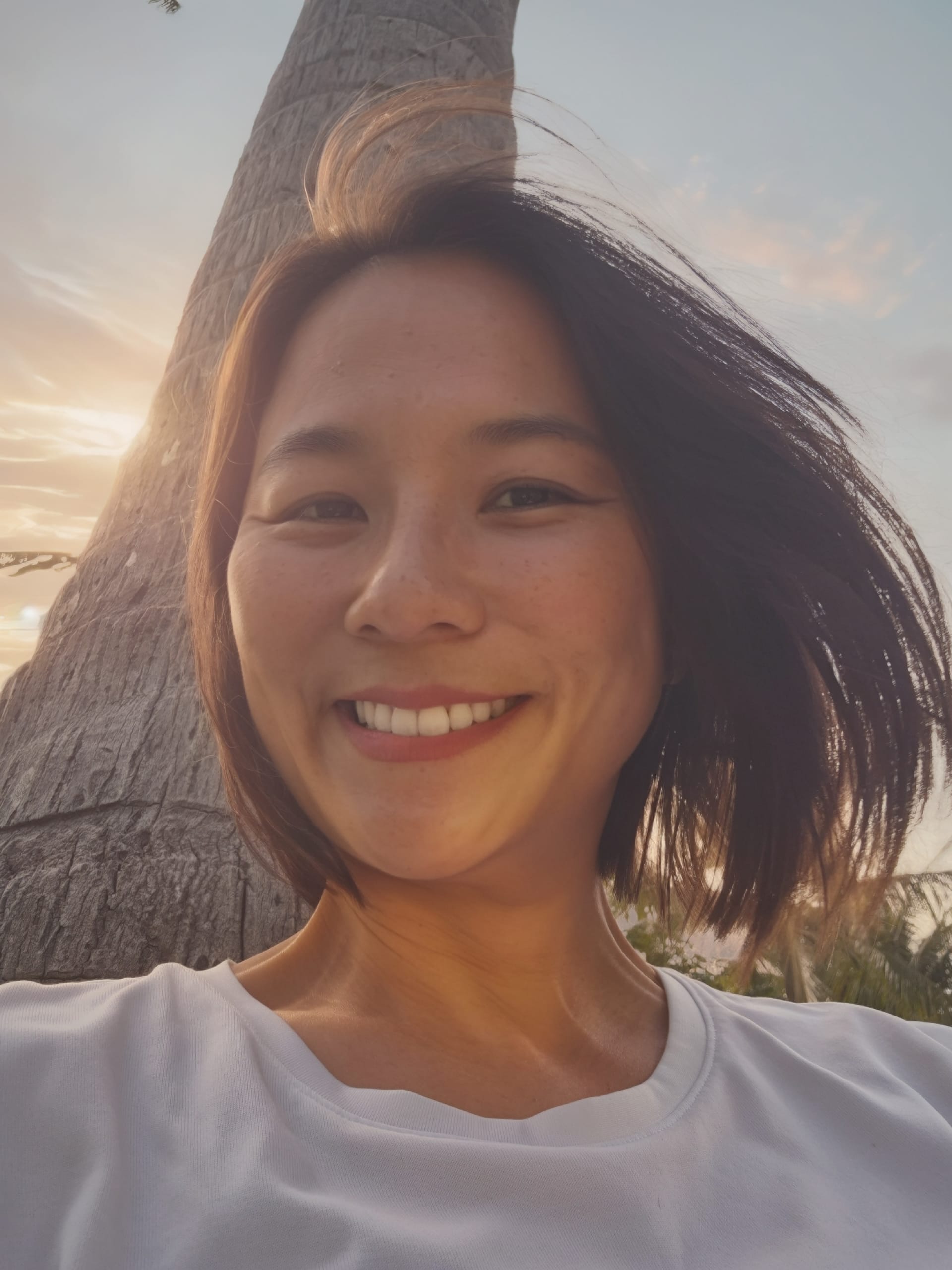
Who I am, and what I do.
My name is Kwan.
I am a child of the ’90s, now moving through my forties with more clarity than certainty. More honesty than ambition.
I am an introvert by nature—an INFJ who scores exceptionally low in Agreeableness on the Big Five scale—which, in plain terms, means that I have never been particularly skilled at belonging through proximity. I no longer gather worth from social performance or status. My orientation has now (since 2015, to be exact) been inward: toward reflection, imagination, solitude, and sustained inquiry.
This website exists precisely because of that.
Putting myself fully into the public sphere—writing openly, personally, and without dilution—is not a branding exercise for me. It is an act of individuation.
I was born and raised in a small town northeast of Bangkok, Thailand, in a family shaped by both visible and invisible complexes. As a child, I was quiet, shy, and deeply questioning, with little self-esteem but a persistent sense that life must mean more than what was immediately offered. I didn’t like myself much then, but I was already searching—for coherence, for meaning, for something that felt like home.
At seventeen, I left home to pursue architecture. In the logic of my twelve-year-old self, the solution to find a place where I belonged was simple: if I could not find it, I should learn how to build one. That first attempt failed quickly. The longer story lives elsewhere, but what matters is that I didn’t stop. I followed intuition and perseverance to Sydney, Australia, determined to hold on to that original dream.
Then life intervened
The 1997 Asian Financial Crisis—an invisible force that swept through Southeast Asia like a financial pandemic—collapsed the fragile scaffolding of my plans.
Survival was not optional.
I began waiting tables in a Thai restaurant, served drinks in pubs, and anywhere that would allow me to financially continue studying. This was not a familiar path for someone from my background; it felt like a personal and cultural rupture. An endurance test of juggling one of the most demanding schools (architecture) in the land that spoke a foreign language, and maintaining the will to thrive.
Fear had no time to settle. There was only physical endurance and mental fortitude against time, and the little heart that was still beating.
That period marked my first true dark night of the soul. It was also when I began seeking professional mental health support and, alongside it, spiritual inquiry—not as escape, but as a way of asking the only question that mattered to me since a young age: what is the point of all this—of this life, this suffering, this persistence?
Against the odds, I graduated from the University of New South Wales in 2004. Dreams do sometimes come true—but they rarely arrive in the form we fantasize.
I returned to Thailand in 2005 and entered the profession I had sacrificed so much to reach, Architecture. It took me ten years to run that unconscious race to nowhere, to find it was not the home I had been searching for. My core beliefs had shifted. The work no longer held the meaning it once promised.
While navigating the arrival of the 'real adult life' in an unthinkable, shattered dream as a hard-working, low-paid architect in Bangkok, I began practicing Vipassana meditation—quietly, consistently, without fanfare. What started as a support became a lifelong discipline. Since 2006, Vipassana has remained my primary way of knowing: observing sensation, impermanence, and the unfolding of mind and body without ideology or belief.
By my late thirties, I had reached the pinnacle of my career and, unexpectedly, fell in love with the man who would become my husband—a passionate, talented chef, five years my junior. Two years later, I stood at another threshold.
One path preserved everything I had built: identity, status, familiarity, certainty. The other required relinquishing all of it—moving countries, marrying, becoming someone I could not yet imagine in the land (s) of the unknown.
And I chose the unknown.
I trusted intuition, as I always had, and entered a seven-year liminal passage that would come to define this body of work, which is;
"Leaving one life without yet arriving in another. Losing identity, direction, certainty. Living between endings and beginnings, suspended in time and meaning."
This blog began there—in the in-between—documenting what it means to walk without a map as an act of drawing one.
It was during this prolonged threshold that something fundamental became clear: the home I had been searching for all along was not a place, a profession, a relationship, or even a person. It was the Self—the one that had never left, only waited to be consciously met.
A student of depth psychology and a Vipassana meditator
In particular credit to the work of Carl Jung, which gave language to this realization. Individuation, as Jung described it, is not self-optimization but integration: the slow, honest process of becoming whole by including shadow, contradiction, loss, and meaning. The Hero’s Journey—so often misunderstood as triumph—revealed itself to me as a psychological map of descent, initiation, and return.
Alongside psychology and philosophy, symbolic languages—myth, archetype, astrology, tarot—have always quietly informed my perception. I use them not as belief systems, nor as predictive tools, but as symbolic grammars of the psyche. Like dreams, they offer orientation rather than answers. They help name timing, inner weather, and recurring human patterns when rational frameworks alone fall short.
Vipassana keeps this work grounded. It insists on direct experience over belief, observation over projection. Together, contemplation and symbolism form the ethic of my writing: depth without dogma, meaning without ideology.
Today, I live a meaningful life with my husband and our two dogs, Wallie and Bekki—they are (one of) the homes I've found. I now feel at home, not because everything is resolved, but because I am no longer fragmented. I am whole.
The Individual Star is part of my life mission: to write openly from this integrated place and to meet others who have answered the call to enter the unknown—not to become extraordinary, but to become true— in public. I am in a sacred process of writing and weaving together my personal essays, drawn from my life experience, as documented in my journals over the years. I hope to begin the publishing process in 2027.
As Jung wrote,
“The privilege of a lifetime is to become who you truly are.”
We each carry a story in which we are the protagonist. Revisiting it—honestly, without romanticizing or erasing—is how we reclaim authorship.
Rise or fall, clarity or confusion, light or shadow: it all belongs.
I am now doing just that.
If this work resonates, you are likely already on that path too.
Welcome.